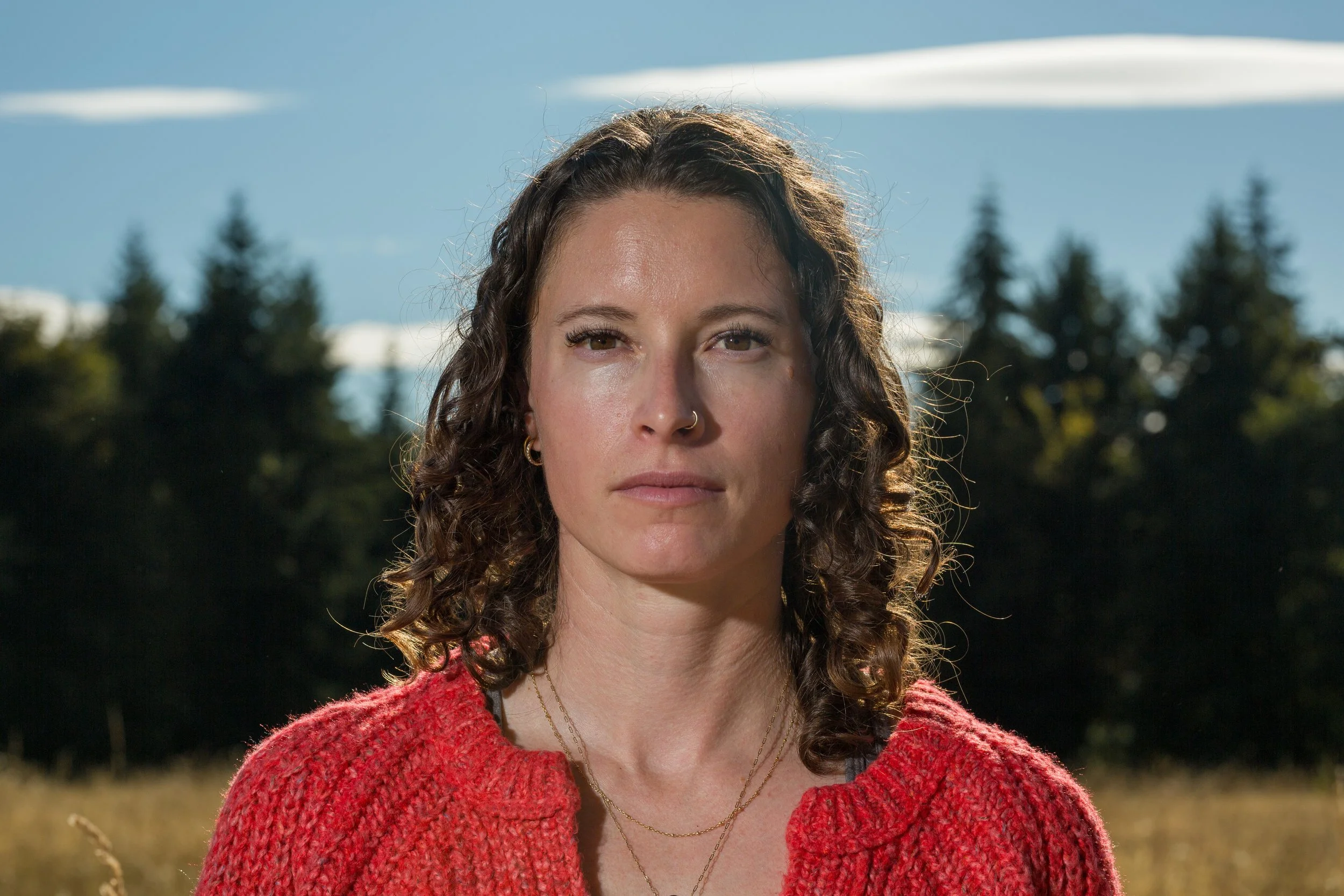
It is the first week of cross country season, and Jena Winger is not there. Her former distance runners are welcoming a new class of freshmen, starting the first miles of the season together. She has spent the week finding things to keep herself busy, most of which, it turns out, are cross-country adjacent anyway.
Running was never a decision so much as an inheritance. Both of Winger's parents ran at the University of Washington, and she was on the track by five. The identity came easily for a while, through junior high and into the early years of the sport, until ninth grade hit and what she calls the “puberty bomb” landed. She had no explanation for it. Neither did anyone around her. It would take a college coach ordering bloodwork, years later, to find out why: her ferritin, the marker for iron stores, came back at 4. She had been running on empty without anyone knowing it.
College itself was never in question. Running in college was the uncertain part. Her times as a high schooler put her mid-to-low 20-minute range for 5K, respectable, not obviously recruitable, and she hadn't spent much time thinking about which program might want her until she tagged along on a friend's recruiting visit to Willamette University, a small liberal arts school in Oregon that happened to mention, almost in passing, that the cross country team didn't cut anyone. That was enough. She applied nowhere else that mattered to her and committed.
It turned out to be exactly the right room for her. Willamette's team had won its conference championship four consecutive years by the time she arrived, a streak that continued through her tenure, and rebuilding her iron levels through her freshman year was slow, unglamorous work that started to pay off by her sophomore season. She remembers the exact moment the confidence turned: out-kicking a freshman teammate to score varsity points for the first time, a small thing that reordered how she saw herself. She made nationals in both cross country and track from that point on and went on to win four conference titles across her career: the steeplechase in 2007, then the steeplechase, 1500, and 5K in 2008, a season that also earned her Northwest Conference Athlete of the Meet honors as a junior. Nationals told a different story every time. She arrived, and came apart. It happened enough times that her coach eventually brought in a sports psychologist, hoping to find the thing that kept unraveling her at the one meet that mattered most.

What she carried out of college wasn't a fixed problem. It was a habit of study. She interned in Nike's wear-testing department, guided there by a Willamette alumna who'd once held her own steeplechase school record. She ran her senior research project on cardiovascular drift, the kind of niche physiological question that only makes sense to someone who has already decided running is something to be understood, not just done. After graduation she took a job at a sports chiropractic clinic in Portland, then at a startup running apparel company, where a connection to Nike's CEO, whose son had been her college teammate, let her assemble an all-star relay team for Hood to Coast. The apparel job ended when she was let go, which she now describes, without much drama, as the best thing that could have happened to her.
She went home and took a job managing a running specialty store, work she calls unexpectedly formative, because it was the first time she had to reckon with the fact that most of the people she was serving weren't athletes chasing times. They were people who wanted shoes that felt right and lives that worked. It reshaped how she thought about who she was actually there to help, well before she ever coached a single practice.
The job she'd wanted all along came through a connection at Brooks, where she joined a small team, three people total, responsible for consumer insight across the entire footwear line, reporting to a boss who held the title she'd eventually be mistaken for holding herself. She traveled internationally to understand not just what people wore, but why, and helped build that “why” into how the company updated its shoes. She was seven years into that career when she became pregnant with her first child. A month later, her husband was diagnosed with stage four lymphoma.
You just had to steal my thunder.
He responded well to treatment and was declared cancer-free within six months, dry humor doing the work grief usually does. Midway through his chemo, a friend who'd come to stay during the hardest stretch pushed them to finally act on a plan they'd talked about for years: moving to Bainbridge Island once their kids were school-age. They put an offer on a house they'd been eyeing. It closed. They moved in February 2020. The world shut down the following month.
She was on maternity leave when COVID hit, and somewhere in the isolation of new motherhood, talking to a baby all day, days blurring together, she made two decisions in quick succession. She wasn't going back to Brooks. And she needed something to reorganize her mind around. She got her private pilot's certificate. Almost simultaneously, with her oldest still in a stroller, she started coaching.
It is a habit she traces back further than coaching, to a research advisor in college, Stasinos Stavrianeas, cleaning lab equipment alongside her one afternoon.
I would never want to ask somebody to do something that I'm not willing to do myself.
A line she has carried into every program she's built since, whether anyone was watching her carry it or not.
The decision had been building for years before it became a letter. Winger had come up through the program as an assistant, coaching distance runners with a growing sense of how she wanted the work done: plan backward from the goal race, build the training around it, hold the line even when it would be easier not to. It is a philosophy that works in some cultures and stalls in others. In this one, it stalled. She asked, more than once, for a piece of the program she could simply own, one group, one lane, room to run it her way. It was never fully hers to run.
The cost showed up somewhere she hadn't expected: not in her training, but in her own head. She wanted to do her best work and kept being made to feel, in small ways, that wanting it was the problem. She stayed one more season past the point she was ready to leave, for a single athlete she didn't think would make it through senior year without her. Then, the morning after the team's banquet, she wrote the letter.
What stayed with her wasn't the decision, she still believes it was the right one, but the echo of an earlier version of herself, years before, hearing her own track athletes ask if she was about to disappear the way other coaches had. She recognized the hypocrisy immediately: asking those kids to trust in her continuity while she walked away from a different team that needed the same thing from her. She sat with that discomfort rather than resolve it. The test she landed on was simpler than the guilt. If one of her own athletes had been in this position, good work going unrewarded, health paying the price, she would have told them to walk away too. She did the thing she would have asked of them.
The thing she built afterward would not exist otherwise. Unable to fully own a program inside someone else's structure, she built her own from nothing: a running camp modeled on the community she'd admired at a camp in Oregon, deliberately open to every gender identity, mental skills and nutrition education built in from day one rather than bolted on as an afterthought. It took a year and a half of dead ends, a 501(c)3 filing that wasn't originally part of the plan, and enough hours that she now finds herself calculating them for grant applications. Stepping away from cross country didn't shrink her role in the sport. It forced her to ask a bigger question: not what team she could run, but what impact she wanted to have at all.
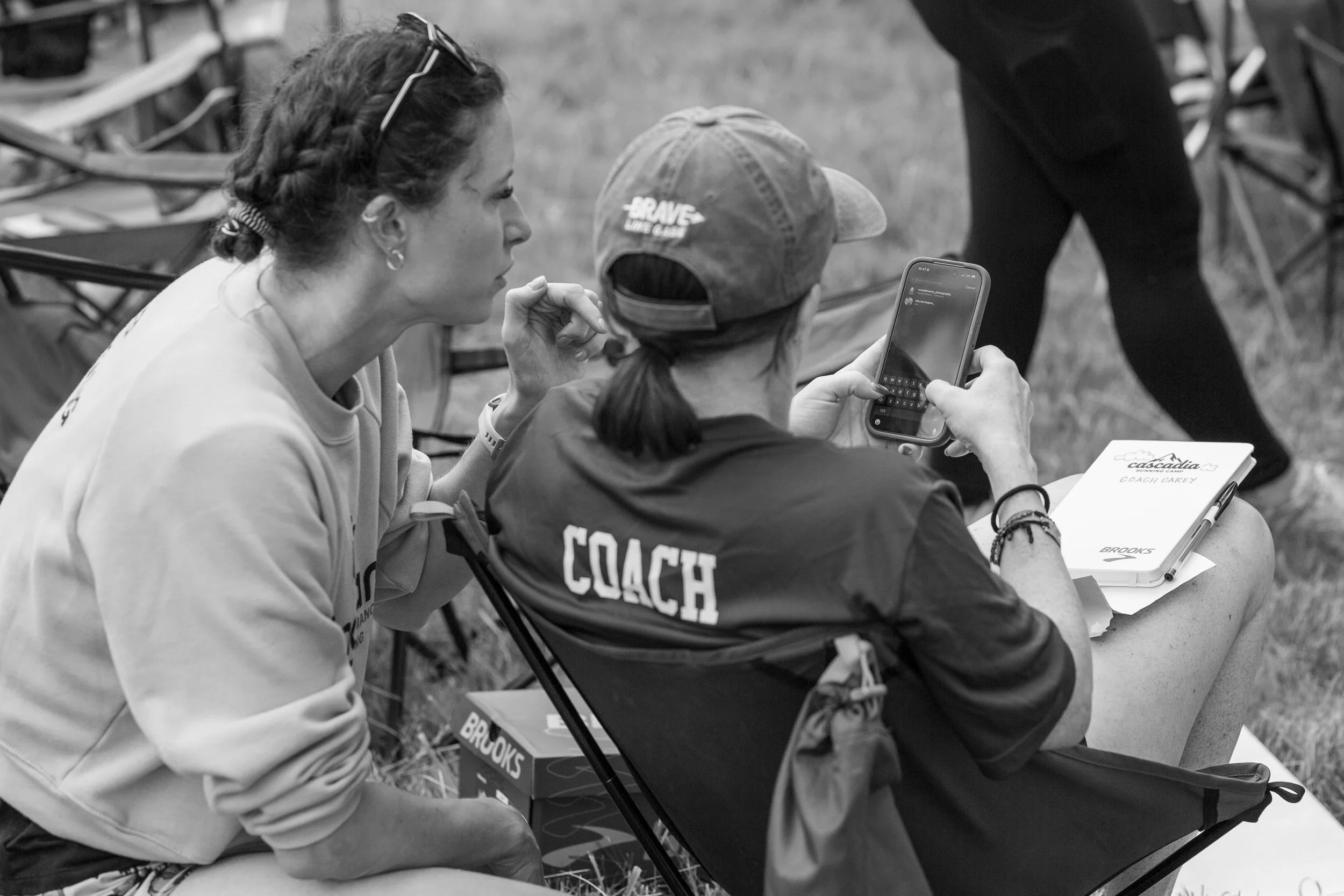
The following spring, the longtime track and field head coach retired, and the job went to Winger. Same building she'd walked away from months earlier, different team, and this time the thing she'd asked for and never fully gotten in cross country, a program she could run her way from top to bottom, was simply hers. She didn't build this one from nothing. It was handed to her, on the strength of years spent doing the distance-coaching work well enough that handing it over was the obvious call.
She is thirty-nine, coaches high schoolers and adults, still chases her own goals, and has stopped thinking that has anything to do with anyone's age but her own.
